A Golden Surprise in Assam: My Most Unforgettable “Birding” Day!
The crisp morning air of late November, 2023, carried the promise of an epic birding adventure in the lush, vibrant heart of Assam. Armed with my trusty binoculars, a camera poised for action, and an unshakeable sense of anticipation, I ventured into the dense foliage, eager to witness the avian wonders this incredible region is renowned for. I’d dreamt of exotic hornbills, colorful sunbirds, and elusive babblers. Little did I know, Mother Nature had a far more extraordinary, and utterly golden, surprise awaiting me.
Assam, a land of verdant tea estates, mighty rivers, and ancient forests, is a biodiversity hotspot. Every rustle in the leaves, every distant call, sparked my imagination. For hours, I walked silently, my eyes scanning the canopy, my ears straining for the tell-tale chirps and flutters. I saw myriad shades of green, felt the gentle humidity, and breathed in the earthy scent of the forest. The birds, however, seemed to be playing a very elaborate game of hide-and-seek. While I certainly appreciated the tranquility and the immersive natural beauty, the main stars of my planned “birding list” remained elusive.
An Unexpected Golden Encounter: More Than Just Birds
Just as a hint of polite disappointment began to creep in, and I started mentally preparing for a peaceful, albeit bird-less, nature walk, my local guide suddenly froze, raising a hand. His eyes, sharper and more attuned to the forest’s secrets than mine, were fixed on a spot high in a colossal tree. I followed his gaze, my heart now thumping with a different kind of excitement. Through the dense canopy, a flash of something utterly brilliant caught my eye. It wasn’t a bird, not in the traditional sense, but it was something far more rare, far more captivating.
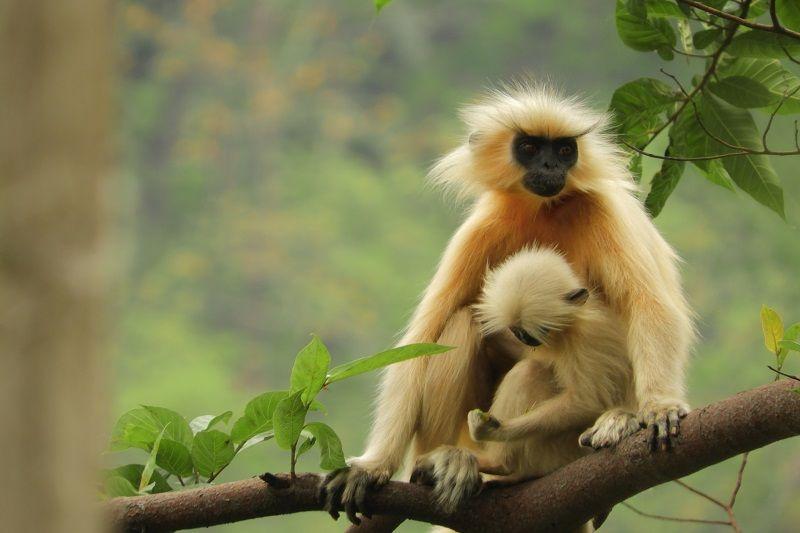
Perched securely on a sturdy branch, nestled among lush green leaves, was a creature of breathtaking beauty: a Golden Langur. And not just one, but a mother gently cradling its tiny infant! My breath hitched. This was an astonishing sight, a true privilege. The mother’s vibrant, shimmering golden-yellow fur glowed against the verdant backdrop, a stark and beautiful contrast to its distinct, velvety black face. Her eyes, watchful and serene, conveyed an ancient wisdom.
Beside her, the infant was a vision of pure innocence. Its fur, a lighter, creamy-white, stood out against its mother’s golden coat. It clung to her, a tiny beacon of new life, utterly dependent and utterly precious. The scene was one of profound tenderness and resilience, an intimate glimpse into the lives of one of India’s most endangered primates. I stood transfixed, camera forgotten for a moment, simply soaking in the magic of that instant. It was a stark reminder that sometimes, the greatest treasures in nature aren’t what you set out to find, but what finds you.
Unveiling the Golden Langur: A Jewel of Assam
This wasn’t just any sighting; it was an encounter with a true icon of biodiversity, an endangered species that holds a special place in the ecological tapestry of Assam and Bhutan. The Golden Langur (Trachypithecus geei) is instantly recognizable by its striking golden-yellow to creamy-white pelage, which covers its entire body, creating a mesmerizing visual. The contrasting black face, often framed by a fringe of longer hair, adds to its distinctive appearance. These unique morphological features were clearly visible on the mother, confirming our identification.
The infant’s lighter, creamy-white fur is a fascinating characteristic. Golden Langur infants are born with this distinctively lighter coat, which gradually darkens to the species’ characteristic golden hue as they mature. This observation was particularly special, highlighting a key aspect of their development. The strong bond and intensive maternal care we witnessed are vital for the survival of these primates. With their limited and fragmented habitat exclusively in a small region of western Assam and Bhutan, every individual and every new birth is incredibly significant.
While my “total species observed” for the day technically amounted to one (and not a single bird!), the profound joy and educational value of this encounter far surpassed any checklist goal. It taught me that wildlife watching isn’t just about ticking boxes; it’s about the deep connection you forge with nature, the unexpected wonders it reveals, and the humbling realization of its fragile beauty.
Tips for Your Next Wildlife Spotting Adventure in Assam
Even if your primary goal is bird watching, an open mind and a little preparation can lead to incredible wildlife photography Assam opportunities. Here are a few tips to enhance your experience, whether you’re after rare birds or elusive primates:
- Patience is Paramount: Nature operates on its own timetable. Be prepared to wait, observe, and simply enjoy the surroundings. My langur sighting was a testament to this!
- Go with a Local Guide: Their knowledge of the terrain, local flora and fauna, and animal behavior is invaluable. They often spot things you’d never notice.
- Binoculars and Camera: Essential for getting closer views without disturbing the animals. Even if you’re not an avid wildlife photography enthusiast, good optics enhance the experience.
- Dress Appropriately: Earthy tones help you blend in, and comfortable, layered clothing is key for fluctuating forest temperatures.
- Silence is Golden: Move quietly and speak softly, if at all. This increases your chances of spotting shy creatures like the Golden Langur.
- Best Time to Visit: The cooler, drier months from November to April are generally best for wildlife spotting in Assam, offering clearer skies and more active animals.
- Respect Wildlife: Maintain a safe distance, never feed animals, and leave no trace behind.
Conservation: Protecting Assam’s Golden Treasure
Encountering the Golden Langur brought home the urgent need for conservation. This endangered species India faces significant threats, primarily habitat loss and fragmentation due to human encroachment, logging, and agricultural expansion. Their survival is intrinsically linked to the health of the very forests I explored.
As visitors and nature enthusiasts, we have a role to play. Supporting responsible ecotourism initiatives, advocating for habitat protection, and raising awareness about these incredible creatures are crucial steps. Every dollar spent with ethical tour operators and every voice raised for conservation contributes to their future. The pristine beauty of Assam wildlife, including its unique primate populations, is a global heritage that we must collectively safeguard.
A Memory Etched in Gold
My “birding” trip to Assam turned out to be anything but ordinary. It was a profound lesson in humility, patience, and the sheer unpredictability of nature’s gifts. While I didn’t add a single bird to my life list that day, I gained something infinitely more valuable: the unforgettable memory of a Golden Langur mother and her infant, a symbol of hope and vulnerability in the heart of a breathtaking forest. It was, without a doubt, my most unforgettable wildlife experience, and a powerful reminder that sometimes, the greatest discoveries are found off the beaten path, far beyond our initial expectations. Keep your eyes open, your heart receptive, and you never know what golden magic awaits you in the wild!
No responses yet