There’s something uniquely enchanting about the crisp, cool air of an Assam morning. The air hums with the promise of discovery, a symphony of unseen creatures awakening in the dense, emerald embrace of the forest. I set out with my binoculars and camera, heart thrumming with the hopeful anticipation that every nature enthusiast understands – the thrill of searching for the region’s incredible avian diversity. While my primary quest might have been for fleeting feathered jewels, Assam, as it often does, had a magnificent surprise waiting for me. This wasn’t just another birding trip; it was an awakening to the broader, breathtaking tapestry of wildlife that thrives in this incredible corner of India. It was a day etched forever in my memory, a testament to the unexpected wonders that await when you truly immerse yourself in nature. Join me as I recount the mesmerizing encounter that became the absolute highlight of my recent journey into the heart of Assam.
The Golden Gaze: An Unforgettable Encounter
The sun was just beginning to paint the sky in hues of soft orange and pink, dappling through the thick canopy as I navigated a secluded trail. The forest was alive with chirps and rustles, each sound a clue, each movement a potential sighting. My eyes were scanning the branches, trained for the flutter of wings, when a sudden, unexpected rustle high above caught my attention. It wasn’t the quick dart of a bird, but something larger, more deliberate. I slowly raised my binoculars, my breath catching in my throat as the world narrowed to a single, breathtaking image.
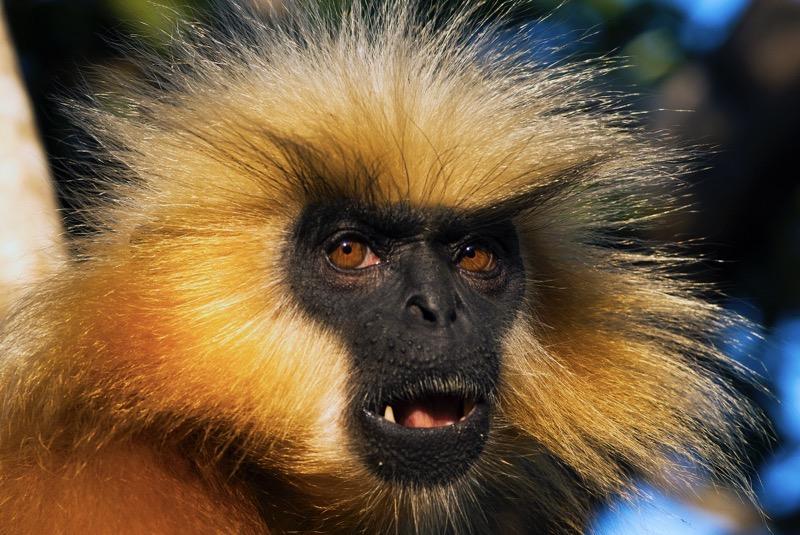
And there it was. Perched regally amidst the verdant foliage, a creature of such striking beauty that it momentarily stole my voice: a Golden Langur. It wasn’t merely a glimpse; it was a profound, direct encounter. The langur turned its head, its alert and curious eyes meeting mine with an intensity that transcended the distance between us. Its mouth was slightly ajar, a tiny revelation of teeth, as if it was about to vocalize a greeting or was perhaps startled by my presence. The moment was pure magic, a connection forged in the quiet reverence of the wild.
The distinctive black, hairless face was framed by an astonishing, shaggy mane of bright golden-orange fur. On its crown, the fur appeared lighter, almost spiky, giving it an ethereal halo. It looked like a mythical being, a guardian of these ancient forests. The soft blur of the background, with its dappled light, only emphasized its majestic presence, highlighting its perfect adaptation to this arboreal world. To witness such a creature, so vibrant and alive, in its natural habitat, was an absolute privilege and the pinnacle of my wildlife watching experience in Assam.
About the Magnificent Golden Langur (Trachypithecus geei)
This incredible primate, the Golden Langur, is not just beautiful; it’s a treasure of the natural world, endemic to a very specific, small region straddling western Assam, India, and neighbouring Bhutan. Observing it firsthand provided a powerful lesson in its unique characteristics and lifestyle. They are highly arboreal, meaning they spend almost their entire lives high up in the forest canopy, a fact clearly evident as it moved with effortless grace through the branches.
Their diet is primarily folivorous, consisting largely of leaves, fruits, and flowers – a diet perfectly suited to their forest home. What struck me, even in that brief, intense moment, was its evident intelligence and the rich complexity of its communication. They are known to use a variety of vocalizations, and that slightly open mouth I observed might well have been a prelude to one such call, or perhaps a moment of surprise shared between species.
Identification of the Golden Langur is unmistakable, as its physical characteristics are so uniquely defined. The stark contrast between its jet-black, hairless face and the brilliant, shaggy ruff of golden-orange fur around its head and cheeks is its undeniable signature. The lighter, spiky golden-blonde fur on its crown further distinguishes it. There is truly no other primate in the region that boasts this exact, vivid combination of colours, making a sighting an instant and thrilling identification. These defining features, combined with its limited geographical range, make every sighting a precious reminder of Assam’s irreplaceable biodiversity. It’s a species that demands our attention and admiration, not just for its beauty but for its crucial role in the ecosystem.
Beyond the Golden Glow: The Forest’s Embrace
While the Golden Langur was undoubtedly the star of the show, the broader experience of being in the Assam forest was equally profound. Even though my binoculars didn’t yield a long list of specific bird species on this particular morning, the forest itself was a vibrant tapestry of life. The air was filled with the unseen chatter of diverse birds, their calls echoing through the trees – a constant, melodious backdrop that promised hidden wonders. I heard the distant calls of what I suspected were hornbills, the quick chirps of smaller passerines, and the mysterious rustles in the undergrowth that hinted at a myriad of other creatures.
The sheer richness of the vegetation, the damp earth underfoot, the sunlight filtering through ancient trees – all contributed to an immersive natural experience. Every rustle of leaves, every shadow, held the potential for discovery. This journey reinforced the idea that sometimes, the most memorable moments are not about ticking off a list, but about the profound connection you feel with the wild, even in the absence of a dozen specific sightings. It’s about being present, listening, observing, and allowing nature to reveal its magic in its own time.
Tips for Your Assam Wildlife Adventure
Planning your own expedition to Assam’s magnificent forests? Here are a few tips to help you make the most of your nature travel India experience:
- Patience is Key: Wildlife, especially elusive species like the Golden Langur, rarely perform on cue. Be prepared for long waits and appreciate every moment spent in nature, even if you don’t spot your target immediately.
- Hire a Local Guide: An experienced local guide is invaluable. They know the terrain, the best spots, and often have an uncanny ability to spot animals you might miss. Their knowledge of local flora and fauna, including birding in Assam hotspots, is unparalleled.
- Gear Up: Good binoculars are essential for distant observations. A reliable camera with a telephoto lens is a must if you’re hoping for wildlife photography. Don’t forget a notebook for jotting down observations and a field guide.
- Dress Appropriately: Wear comfortable, earthy-toned clothing that blends into the environment. Long sleeves and trousers can protect you from insects and scratches.
- Respect the Wildlife: Maintain a respectful distance, avoid loud noises, and never disturb or feed the animals. Leave no trace behind. Your presence should be as unobtrusive as possible to ensure these creatures continue to thrive.
- Visit During the Right Season: While wildlife can be seen year-round, the cooler, drier months (October to April) often offer the best visibility and more comfortable conditions for exploring.
Remember, a trip to Assam is more than just a safari; it’s an opportunity to connect with one of the most biodiverse regions on Earth.
Guardians of Gold: A Call for Conservation
My encounter with the Golden Langur was not just a beautiful experience; it was a powerful reminder of the fragility of our natural world and the urgent need for conservation efforts. The Golden Langur is classified as an endangered species, primarily threatened by habitat loss due to deforestation, human encroachment, and agricultural expansion. Their survival is intrinsically linked to the health of the forests of Assam and Bhutan.
Learning about such rare species and endemic species Assam has a profound impact. It strengthens my resolve to advocate for their protection. Every step we take to support local conservation initiatives, promote sustainable tourism, and raise awareness about these magnificent creatures contributes to their future. It’s about understanding that these animals are not just statistics; they are living beings with complex lives, and they play a vital role in the intricate balance of their ecosystems. Preserving their habitat means preserving a piece of Earth’s irreplaceable natural heritage.
A Golden Memory, A Lasting Impression
As I left the forest that day, the image of the Golden Langur’s intelligent gaze stayed with me. It wasn’t the dozens of bird species I might have hoped to tick off, but the single, profound encounter with this golden marvel that made the trip truly unforgettable. It underscored the magic of nature travel India and the incredible diversity waiting to be discovered.
This experience cemented my belief that every venture into the wild holds the promise of wonder, often in the most unexpected forms. Whether you’re an experienced primate watcher, an avid birder, or simply someone who appreciates the beauty of nature, Assam offers an unparalleled journey into the heart of biodiversity. I returned not just with photographs and memories, but with a renewed sense of awe and a deeper commitment to protecting these precious natural treasures. Here’s to many more unexpected golden moments in the wild!
No responses yet