Sometimes, nature has a way of surprising you. You set out with a specific goal, a particular creature in mind, and the wilderness gifts you with something entirely unexpected, yet utterly breathtaking. That’s exactly what happened to me on a crisp November 12th, 2024, deep in the heart of Assam. My mission? To immerse myself in the vibrant ecosystem of a local park, primarily hoping to catch a glimpse of the elusive Golden Langurs. Little did I know, this trip, initially conceived for primates, would redefine my understanding of avian wonders and lead to an unforgettable encounter with one of Assam’s most charismatic ‘birds’.
The morning mist hung heavy, slowly retreating to reveal the emerald canopy of the Assamese forest. Binoculars at the ready, camera poised, I trekked along the well-worn paths, listening intently for the chirps and calls that would betray the presence of various winged inhabitants. While the usual suspects — bulbuls, drongos, and sunbirds — sang their morning chorus from unseen perches, the true star of the day was something far more unique, something that truly transcended typical bird classifications with its stunning presence and arboreal grace.
An Unforgettable Sighting: The Golden Langur
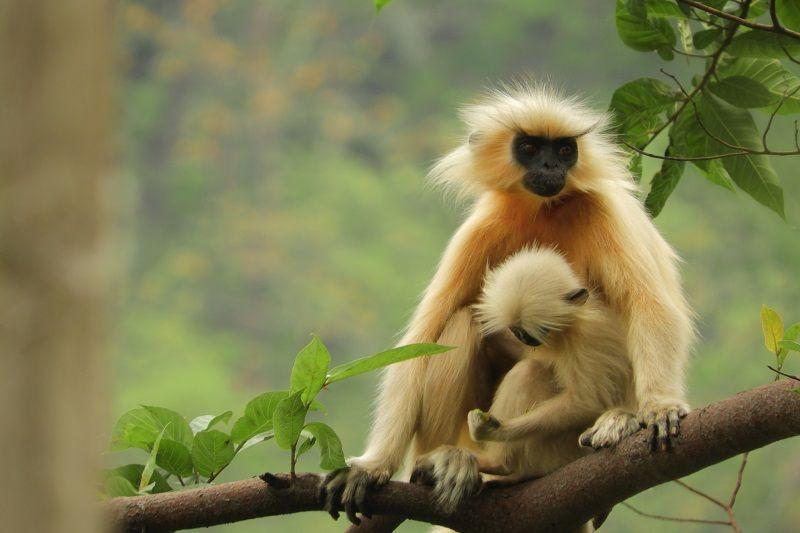
Hours melted into the serene rhythm of the forest. My neck was getting a workout scanning the upper reaches of the trees, and just as I was beginning to wonder if today would be one of those quiet days, a flash of golden-cream caught my eye. High up on a sturdy branch, bathed in dappled sunlight, was an adult Golden Langur, cradling a young infant close to its chest. It was a sight that stopped me dead in my tracks.
The adult, likely a protective female, gazed towards the right with an alert, watchful expression, her dark face a striking contrast to her luminous fur. The infant, a miniature replica of its parent, seemed content, perhaps resting or feeding, oblivious to the awe it inspired below. It was a poignant moment, a testament to the wild beauty thriving within these forests.
More Than Just a Pretty Face: The Golden Langur’s Unique Lifestyle
What makes the Golden Langur an absolutely fascinating ‘bird’ to observe, even for seasoned birders, is its highly specialized arboreal lifestyle. These magnificent creatures spend nearly their entire lives in the tree canopy, a critical adaptation for their survival. Their primary diet consists of mature leaves, fruits, and flowers found in the dense forests, making their reliance on healthy tree cover absolute. This specialized arboreal existence, beautifully showcased by the pair resting comfortably on the branch, highlights their vulnerability to habitat fragmentation and deforestation. Observing them in their natural habitat truly underscores the urgency of conservation efforts.
Spotting the Golden ‘Bird’: Identification Tips
Identifying this particular ‘bird’ is relatively straightforward once you know what to look for. The uniform golden-cream coloration of their fur, seen on both the adult and the infant, is a definitive characteristic. Their distinct black faces are another unmistakable feature, beautifully framed by a prominent, lighter fur fringe around the adult’s face. These visible traits are unique to the Golden Langur (Trachypithecus geei). Coupled with the location – Assam – and the context of spotting them in a park, the identification was clear. They are, after all, endemic to a specific region of western Assam and neighboring Bhutan, making their presence here a truly special privilege.
Beyond the Golden Glow: Other Observations
While my initial hope was to log a diverse list of avian species, the day proved to be singularly focused on this golden wonder. Despite patient waiting and diligent scanning of the canopy, no other prominent bird species revealed themselves in such a clear and engaging manner. The forest echoed with distant calls, a constant hum of life, but the Golden Langur remained the undisputed star of my observation log for the day. It was a powerful reminder that sometimes, quality trumps quantity, and a single, profound encounter can be far more rewarding than a long list of fleeting glimpses.
Tips for Your Own Assam Wildlife Adventure
Inspired to seek out Assam’s incredible ‘birds’ and wildlife yourself? Here are a few tips to enhance your experience:
-
Patience is Key: Wildlife, especially rare species like the Golden Langur, often require time and quiet observation. Don’t rush your visit.
-
Respect Their Space: Always maintain a respectful distance from any wildlife you encounter. Never disturb them for a better photo or view.
-
Go Early: Dawn is often the best time for wildlife activity. The forests are cooler, and animals are more active.
-
Essential Gear: Bring good binoculars, a camera with a telephoto lens (if you’re into photography), a notebook for observations, and plenty of water.
-
Hire a Local Guide: Local guides possess invaluable knowledge about animal behavior, preferred habitats, and best viewing spots, significantly increasing your chances of a successful sighting.
-
Dress Appropriately: Wear comfortable, muted clothing that blends with the environment and sturdy walking shoes.
Conservation: Protecting Our Golden Legacy
My encounter with the Golden Langur was more than just a memorable sighting; it was a powerful lesson in conservation. These beautiful ‘birds’ are categorized as Endangered, primarily due to habitat loss and fragmentation. Their survival is intrinsically linked to the health of the very forests they call home. Every visit, every photograph shared, every conversation started about these incredible creatures helps raise awareness and highlights the critical need to protect their natural habitats.
Assam’s forests are treasure troves of biodiversity, home to a myriad of unique ‘birds’ and other wildlife. Let’s cherish these natural wonders and support the tireless efforts of conservationists working to safeguard their future. My ‘birdwatching’ trip to Assam might have yielded only one primary species, but it was a golden one, leaving an indelible mark on my heart and a renewed commitment to appreciating and protecting the wild.
Have you had an unexpected wildlife encounter that stole the show? Share your stories in the comments below!
No responses yet