The rustle of leaves, the distant call of an unseen bird, the humidity clinging to the air – these are the sensations that define a morning in Assam’s lush forests. As an avid birdwatcher, my heart always beats a little faster at the thought of exploring new habitats, and this trip to Assam promised a bounty of avian wonders. I arrived, binoculars in hand and camera at the ready, eager to tick off some spectacular species from my wishlist.
But sometimes, nature has its own magnificent surprises in store, reminding us that the wild is full of unexpected treasures. What began as a dedicated birdwatching expedition transformed into a truly golden encounter, a moment that transcended my initial goals and etched itself permanently into my memory.
The Golden Jewel of Assam’s Canopy
Hours into my trek, I was immersed in the symphony of the forest. Though specific bird sightings remained elusive, the sheer vibrancy of the ecosystem was captivating. Every rustle seemed to promise a rare glimpse, every distant chirp, a new identification. My eyes scanned the canopy, searching for flitting colors, when a movement, larger and more deliberate than a bird, caught my attention.
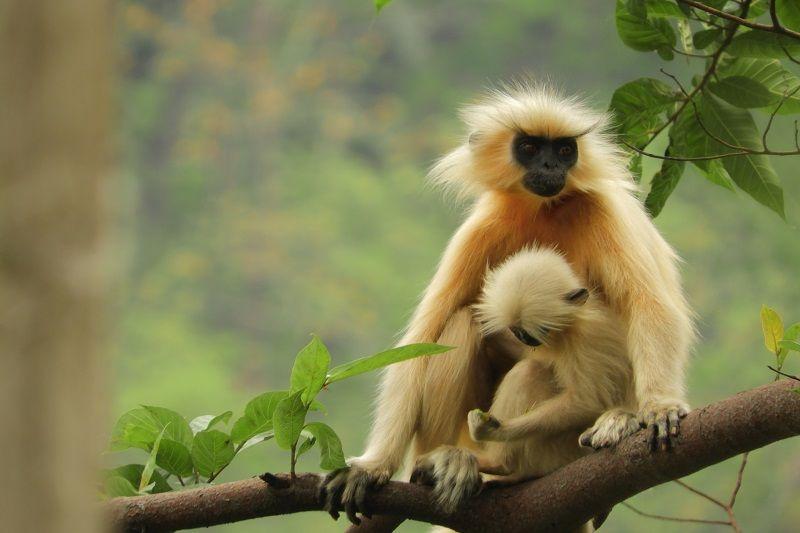
There, perched majestically on a sturdy branch, was an adult Golden Langur. My breath hitched. This wasn’t a bird, but an equally, if not more, extraordinary sight! My initial disappointment about the ‘bird list’ vanished instantly, replaced by an overwhelming sense of awe. The adult, likely a female, exhibited that characteristic bright golden-cream fur that gives the species its name. Its dark, hairless face, with a watchful gaze directed slightly to the right, spoke volumes of its alertness.
And then I saw it – nestled close to her chest was an infant, distinctly paler, almost white, looking downwards, perfectly protected. It was a heartwarming tableau of maternal care in the wild. The vibrant green leaves of the branch framed them perfectly against the blurred, dense background of the forest, a true testament to their natural habitat.
This was the Golden Langur (Trachypithecus geei), an endangered species endemic to a small region of western Assam in India and adjacent Bhutan. To see not just one, but an adult with her strikingly contrasted infant, felt like a profound privilege.
Unveiling the Mysteries of the Golden Langur
My encounter sparked an immediate desire to learn more about these incredible primates. Here are a few fascinating facts that I discovered:
- Distinctive Coloration: The most striking feature is their bright golden-cream fur, which can sometimes appear reddish in certain lights. This makes them truly stand out against the green foliage.
- Infant Magic: As I witnessed, Golden Langur infants are born with a light cream or nearly white fur. This stark difference in coloration from the adult is a key identifier and gradually darkens to the characteristic golden-cream as they mature. Scientists speculate this might help adults easily identify and protect their young.
- Arboreal Lifestyle: Golden Langurs are highly arboreal, spending almost their entire lives in the trees. They are skilled climbers and jumpers, navigating the canopy with incredible agility.
- Diet: Their diet primarily consists of leaves, fruits, seeds, buds, and flowers, making them crucial seed dispersers within their ecosystem.
- Conservation Status: Classified as ‘Endangered’ by the IUCN, their population is threatened by habitat loss, fragmentation, and degradation due to human activities such as logging, agricultural expansion, and dam construction.
Watching this mother and child, a sense of deep appreciation washed over me. It was a reminder that while I had come for birds, the forest offered a broader, equally captivating narrative of life, survival, and unexpected beauty.
Beyond the Binoculars: Embracing Assam’s Wild Heart
While my official ‘bird count’ for this particular excursion might have been zero, the experience was anything but empty. The Golden Langur sighting was the indisputable highlight, but the journey itself was rich with the sounds and signs of other wildlife. I heard the distant calls of hornbills, the chattering of unseen squirrels, and the constant hum of insects – all integral parts of Assam’s vibrant biodiversity. The forest floor revealed tracks of smaller mammals, and the air was alive with the promise of more. This trip taught me to keep an open mind, to appreciate every facet of the ecosystem, and to understand that nature’s greatest gifts often come in forms we least expect.
Tips for Your Assam Wildlife Adventure
Whether you’re primarily a birdwatcher or a general wildlife enthusiast, Assam offers unparalleled experiences. Here are a few tips to make your trip truly rewarding:
- Patience is Key: Wildlife spotting requires immense patience. Spend time observing, listening, and allowing the forest to reveal itself.
- Go Early: Dawn and dusk are often the best times for wildlife activity, including both birds and mammals.
- Essential Gear: Bring good quality binoculars (8×42 or 10×42 are ideal), a camera with a decent zoom lens, a field guide for the region, and comfortable, muted clothing.
- Hire a Local Guide: Local guides possess invaluable knowledge of the terrain, animal behavior, and the best spots. Their expertise significantly increases your chances of sightings.
- Respect Wildlife: Maintain a respectful distance, avoid making loud noises, and never disturb or feed wild animals.
- Be Open to Surprises: While you might have target species, be open to appreciating every creature you encounter. Sometimes, the unexpected moments are the most memorable.
Conservation: A Call to Action for Assam’s Treasures
My encounter with the Golden Langur served as a powerful reminder of the incredible biodiversity that thrives in places like Assam, and the urgent need for its protection. The future of species like the Golden Langur, with its limited habitat, hinges entirely on effective conservation efforts.
Habitat loss and fragmentation are ongoing threats. We, as visitors and admirers of nature, have a role to play. By supporting eco-tourism initiatives that benefit local communities, choosing responsible tour operators, and advocating for protected areas, we contribute to the survival of these magnificent creatures and their habitats. Every rupee spent responsibly in these regions helps demonstrate the economic value of preserving these forests.
Leaving Assam, I carried not just photographs, but a renewed sense of purpose. My birdwatching trip had given me much more than a checklist; it had given me a golden memory and a profound connection to the wild heart of Northeast India. Whether you spot a rare bird or an elusive primate, the magic of Assam’s forests is bound to leave an indelible mark on your soul. Go, explore, and let nature surprise you!
No responses yet