There’s something uniquely exhilarating about embarking on a new wildlife adventure, especially when it takes you to a place as vibrant and wild as Assam, India. I had November 7, 2025, circled on my calendar for months, eager to delve into the rich biodiversity of one of Assam’s lush national parks. My primary mission? To spot some of the incredible avian species that call this region home. Little did I know, the day would unfold into a magical encounter with a different kind of golden treasure, one that left an indelible mark on my heart and reinforced my love for the unpredictable wonders of nature.
Assam’s Golden Secret: An Unforgettable Langur Sighting
The morning started like many of my birding expeditions: early, armed with my binoculars, camera, and an immense sense of anticipation. The air was crisp, carrying the sweet scent of damp earth and exotic flora. As I ventured deeper into the park, the symphony of the forest began to unfold – distant calls of unseen birds, the rustle of leaves, and the gentle hum of insects. I spent a good portion of the morning patiently scanning the tree canopy, hoping for a flash of vibrant plumage or a unique silhouette against the sky. While the birds were playing a bit shy, the forest itself was alive with a subtle energy.
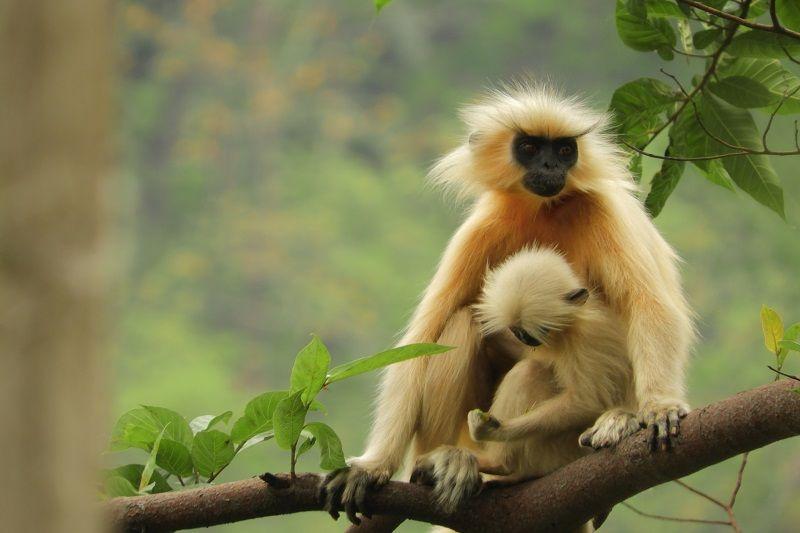
Then, it happened. In a dense thicket of tall trees, a sudden movement caught my eye. It wasn’t a bird, but something far more grand and utterly captivating. Perched majestically on a thick, sun-dappled branch was an adult Golden Langur, its creamy-golden fur glowing against the vibrant green foliage. My breath caught in my throat. This was no ordinary sighting; this was a glimpse into the life of one of Assam’s most iconic and beautiful primates.
I slowly raised my binoculars, my heart pounding with excitement. The adult, likely a female, was gently cradling a tiny, much lighter-furred infant. It was an incredibly tender moment. The mother’s distinctive black face, hands, and feet contrasted strikingly with her luminous golden coat, while her infant was almost entirely white. This striking difference in coloration is a fascinating characteristic of the species, and witnessing it firsthand was truly special. The scene was straight out of a wildlife documentary, and I felt incredibly privileged to be a quiet observer.
For what felt like an eternity, I watched them. The infant occasionally stirred, its tiny hands grasping its mother’s fur, safe and secure in her embrace. The adult, seemingly unfazed by my distant presence, continued to groom the little one, occasionally glancing around with intelligent, watchful eyes. It was a powerful reminder of the deep maternal bonds present throughout the animal kingdom. The lush green backdrop, slightly blurred, emphasized their natural habitat and the tranquility of the moment. This single encounter, though not a bird, became the absolute highlight of my wildlife watching experience in Assam.
Understanding Assam’s Golden Langurs: A Jewel of Biodiversity
The Golden Langur (scientific name: Trachypithecus geei) is a primate species of immense significance, both ecologically and culturally. Endemic to a small region spanning western Assam, India, and neighbouring Bhutan, these langurs are easily identifiable by their glorious creamy-golden fur, which darkens slightly in winter. Their stark black faces, hands, and feet are equally distinctive, providing a striking contrast to their radiant bodies.
One of the most fascinating aspects of Golden Langur development, and something I was lucky enough to witness, is the coloration of their infants. While adults boast that characteristic golden hue, their newborns are born with a strikingly light, almost white coat. This bright, contrasting colour gradually transitions to the adult golden as they mature. Scientists believe this distinct coloration may play a crucial role in adult recognition and protective behaviours, making the vulnerable young more noticeable and likely to receive intense maternal care within the dense canopy.
Golden Langurs are primarily arboreal, meaning they spend almost their entire lives in trees, moving gracefully through the branches. Their diet consists mainly of leaves, fruits, flowers, and seeds, making them vital seed dispersers and contributors to the forest’s health. Unfortunately, these magnificent primates are classified as an endangered species. Habitat loss, largely due to deforestation and human encroachment, along with habitat fragmentation, poses severe threats to their survival. Conservation efforts are crucial to ensure that future generations can continue to witness these golden jewels in their natural habitat.
Tips for Your Next Assam Wildlife Expedition
Even though my primary “bird list” didn’t grow significantly on this trip, the encounter with the Golden Langur taught me the immense value of keeping an open mind and appreciating all forms of wildlife. If you’re planning a trip to Assam for wildlife watching, whether for birds or other incredible creatures, here are a few tips:
- Go Prepared: Always carry good quality binoculars, a camera with a decent zoom, a field guide (for birds and other local wildlife), plenty of water, and insect repellent. Comfortable walking shoes are a must!
- Patience is Key: Wildlife spotting requires patience. Sometimes you’ll see a lot, sometimes very little. But every moment spent in nature is a reward in itself.
- Hire a Local Guide: Local guides possess invaluable knowledge about the flora and fauna, the best spots, and often, the local language, which can enhance your experience significantly.
- Best Time to Visit: The cooler, drier months from November to April are generally considered ideal for wildlife watching in Assam, offering better visibility and more comfortable temperatures, much like my visit on November 7th.
- Respect the Wildlife and Habitat: Maintain a safe distance, avoid loud noises, and never disturb the animals. Leave no trace behind. Responsible tourism is vital for conservation.
- Broaden Your Focus: While you might be after specific birds, be open to appreciating all the wonders around you – insects, reptiles, mammals, and even the intricate plant life. Every part of the ecosystem contributes to the whole.
Conservation in Focus: Protecting Assam’s Precious Ecosystems
Witnessing the Golden Langur and her infant was a poignant reminder of the incredible biodiversity that Assam holds, and the urgent need for its protection. The forests of Assam are not just home to these beautiful primates but also to a myriad of bird species, elephants, rhinos, tigers, and countless other creatures. However, these precious ecosystems are under constant threat from human activities.
Conservation is not just the responsibility of governments or large organizations; it starts with each of us. As wildlife enthusiasts, we have a role to play in promoting sustainable tourism, supporting local conservation initiatives, and raising awareness about endangered species like the Golden Langur. Every responsible visit, every photograph shared with a conservation message, every conversation about the importance of biodiversity, contributes to a larger effort.
Let’s strive to be respectful visitors to these natural sanctuaries, leaving only footprints and taking only memories and photographs. By doing so, we help ensure that these magnificent creatures, from the smallest insect to the majestic Golden Langur, continue to thrive for generations to come.
A Golden Memory and a Call to Action
My birdwatching trip to Assam in November 2025 turned out to be far more than just a search for feathered friends. It was an profound journey into the heart of a vibrant ecosystem, culminating in an awe-inspiring encounter with the Golden Langur. This experience underscored the magic of the wild and the endless surprises it holds.
I left the park that day not with a long bird list, but with a golden memory etched into my mind, a deeper appreciation for primate species, and a renewed commitment to conservation. If you ever have the chance, I urge you to visit Assam, explore its natural wonders responsibly, and prepare to be amazed by whatever extraordinary encounters nature decides to bless you with. Who knows what golden secrets await you?
No responses yet