Chasing Chirps and Finding Gold: An Unforgettable Mussoorie Adventure
The crisp mountain air of Mussoorie, Uttarakhand, always calls to me. On a beautiful morning this past March 15th, 2024, I set out with my binoculars and camera, heart buzzing with the promise of high-altitude avian delights. Perched atop one of the winding hills, with panoramic views stretching into the mist, I was ready to spend the day patiently scanning the canopy for Himalayan specialties. Little did I know, the day had an entirely different kind of golden surprise in store for me – one that wasn’t a bird at all!
The Unexpected Monarch: A Golden Langur Chilling on the Hill
Hours drifted by as I indulged in the quiet joy of observation. The forest was alive with sounds, but the specific bird calls I was hoping for remained elusive. I was adjusting my binoculars, scanning a particularly dense patch of oak trees, when a sudden movement caught my eye. Not a flit of a bird, but something larger, more deliberate. My heart skipped a beat. “Could it be?” I murmured to myself, bringing the lenses into focus.
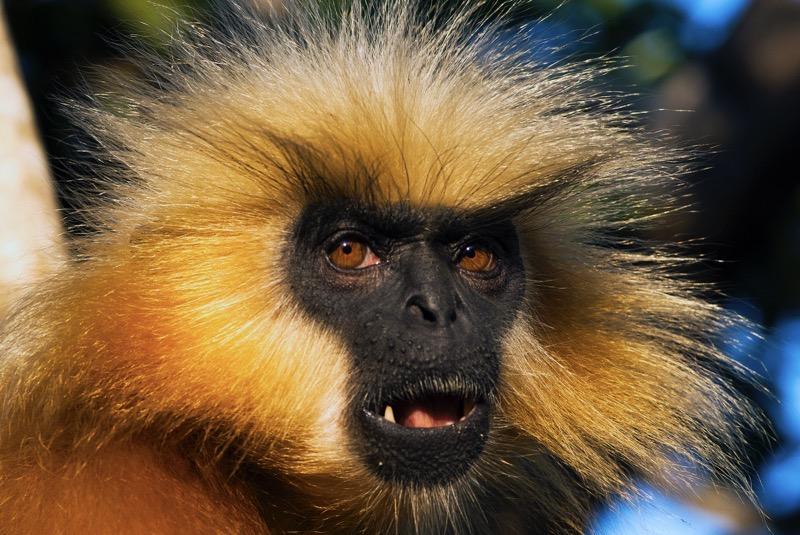
And there it was. Not a bird, not a usual denizen of these slopes, but a magnificent creature I instantly recognized from documentaries and conservation articles: a Golden Langur! It was perched serenely on a sun-drenched patch of the hillside, looking utterly at peace, as if it owned the entire view. Its fur, a vibrant golden-yellow, shimmered in the morning light, framing its strikingly dark, expressive face. Its reddish-brown eyes met mine with an almost regal calm, a profound intelligence radiating from them.
I spent what felt like an eternity, but was probably only twenty minutes, absolutely mesmerized. It seemed perfectly content, occasionally shifting its weight, chewing thoughtfully, and gazing out over the valley. It was the epitome of ‘being chill’, completely undisturbed by my distant, respectful presence. This wasn’t just a sighting; it was an experience, a deep connection with a truly rare and special being in an utterly unexpected setting. My birding trip had transformed into a primate-watching marvel!
Unraveling the Mystery: The Golden Langur’s Story
My mind immediately raced through everything I knew about Golden Langurs (*Trachypithecus geei*). These primates are critically endangered, making every sighting incredibly significant. They are highly arboreal, meaning they spend most of their lives gracefully navigating the tree canopy, foraging for their herbivorous diet of leaves, fruits, and flowers. To see one so clearly, so calmly, on a hillside rather than deep within the trees, was truly a once-in-a-lifetime moment.
What makes this sighting in Mussoorie even more extraordinary is their natural habitat. Golden Langurs are endemic to a very specific and limited region primarily in parts of Assam, India, and neighbouring Bhutan. Their presence in the wilds of Uttarakhand, so geographically distant from their known range, is incredibly unusual and adds an intriguing layer of mystery to my encounter. It makes you wonder about the incredible journeys animals sometimes undertake, or the hidden corners of our world. This unexpected encounter served as a powerful reminder of the rich biodiversity of India and the constant surprises nature holds, especially when we step outside our usual expectations.
Beyond the Gold: What My Binoculars *Almost* Saw (and What You Might!)
While my day was gloriously dominated by the Golden Langur, it’s true that this magnificent primate was the *only* significant wildlife observation of my trip. Despite hours of patient waiting and scanning, the typical feathered residents of Mussoorie remained elusive to me on this particular day. This doesn’t mean Mussoorie isn’t a fantastic birding destination; it absolutely is! The Garhwal Himalayas are renowned for their avian diversity.
Usually, avid birdwatchers here can expect to spot a range of species like the vibrant Himalayan Monal, various Laughingthrushes, Streaked Spiderhunters, the elusive Koklass Pheasant, and a plethora of warblers and flycatchers, especially during migration seasons. My personal experience, however, underscores a fundamental truth about wildlife watching: sometimes, nature throws you a curveball, and the most memorable moments are those you least anticipate.
Tips for Your Own Mussoorie Wildlife Adventure
Even though my trip yielded a unique primate rather than a list of birds, the principles of successful wildlife observation remain the same. Here are a few tips for anyone heading to Mussoorie with an interest in its natural wonders:
- Patience is Key: Whether you’re after birds or mammals, wildlife observation requires calm and quiet patience. The more time you spend observing, the higher your chances of a unique encounter.
- Essential Gear: A good pair of binoculars (8×42 or 10×42 are excellent general-purpose options) is indispensable. A field guide specific to the Indian subcontinent or the Himalayas will help you identify species.
- Dress for Success: Wear muted, earth-toned clothing to blend in with your surroundings. Comfortable walking shoes are a must for traversing hilly terrain.
- Respect the Silence: Move quietly and avoid sudden movements or loud noises. This increases your chances of spotting shy creatures and reduces stress on the animals.
- Best Times: Early mornings and late afternoons are generally the most active times for both birds and mammals.
- Explore Trails: Mussoorie has several excellent walking trails, such as those around Landour, or towards Jabarkhet and Jharipani. These offer prime opportunities for forest exploration.
- Consider a Local Guide: A local guide can significantly enhance your experience, helping you navigate trails and identify species you might otherwise miss.
A Call for Conservation: Protecting Our Precious Wild Neighbors
My encounter with the Golden Langur left an indelible mark on my heart and reinforced the critical importance of conservation. Seeing a critically endangered species, even one far from its typical habitat, drives home the message that every single animal matters. Golden Langurs face severe threats, including habitat loss, fragmentation, and poaching. Their dwindling numbers are a stark reminder of humanity’s impact on the natural world.
As wildlife enthusiasts, we all have a role to play. Support conservation efforts, practice responsible tourism (never disturb or feed wild animals), and educate others about the wonders and vulnerabilities of our planet’s diverse species. Every photograph, every shared story, helps raise awareness and fosters a greater appreciation for the delicate balance of ecosystems.
The Unforeseen Joy of the Wild
My birding trip to Mussoorie didn’t go as planned – and I wouldn’t have it any other way! While the birds might have played hide-and-seek, the universe gifted me with a breathtaking encounter with a Golden Langur, a creature of such beauty and rarity that it completely redefined my day. It was a powerful reminder that nature constantly surprises us, often in the most unexpected and magical ways. So, grab your gear, head to the hills, and be open to whatever incredible wildlife experience awaits you. You never know what golden moments might be just around the corner!
No responses yet