As an avid birdwatcher, there’s a certain thrill that comes with venturing into new, biodiverse landscapes. Last month, I set off for the verdant heart of Assam, my binoculars poised, field guide at the ready, and heart thrumming with the anticipation of spotting some of India’s incredible avian wonders. Little did I know, this particular expedition was about to rewrite my definition of a successful ‘birding’ trip entirely.
Assam, a land celebrated for its rich ecosystems and vibrant wildlife, promises an array of spectacular sightings. I pictured myself documenting hornbills, kingfishers, and a host of colorful flycatchers. But nature, in its infinite wisdom, often has a way of surprising us, and sometimes, the most memorable encounters aren’t with the species you initially set out to find. On this trip, the forest revealed a truly golden secret, one that left me utterly mesmerized.
The Unexpected Star: A Golden Langur Encounter
My eyes were scanning the dense canopy, searching for any tell-tale rustle of leaves or a flash of movement that would betray a feathered friend. The air was thick with the scent of damp earth and verdant foliage, and the distant hum of unseen insects filled the silence. Then, my gaze landed on a thick branch, and my breath caught in my throat. It wasn’t a bird, but something far more rare and utterly captivating.
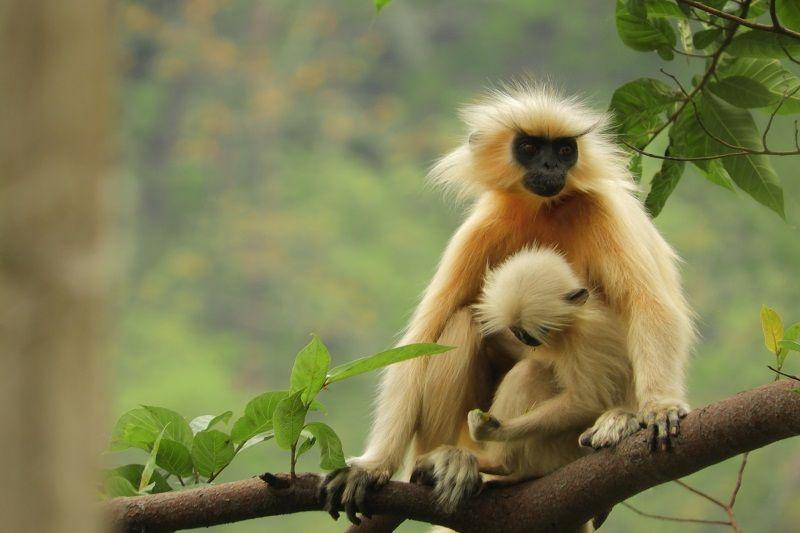
Perched serenely was an adult Golden Langur, undoubtedly a female, her fur a striking golden-blonde that shimmered in the dappled sunlight. Her face, a prominent velvety black framed by lighter hair, held a serene expression. But what truly stole my heart was the tiny, creamy-white bundle nestled gently in her arms: her infant. The baby, with its distinctly lighter coloration, looked down, seemingly secure and protected against its mother’s warm embrace. It was a moment of pure, unadulterated awe, a privilege to witness such tender intimacy in the wild.
Fascinating Facts About the Golden Langur (Trachypithecus geei)
The identification of this magnificent creature as a Golden Langur (Trachypithecus geei) was conclusive. The adult’s distinct golden-blonde to creamy-yellow fur, sharply contrasting with its dark, almost black face, is unmistakable. And the infant’s creamy-white fur? That’s a definitive characteristic! Golden Langur infants are born with this striking lighter coloration, which gradually darkens to the characteristic golden hue as they mature. This unique birth coat is thought to help them blend into their forest habitat and possibly signals their vulnerability to other group members, eliciting protective behavior within their social structure.
These primates are endemic to a small region spanning parts of western Assam and the neighboring foothills of Bhutan. Their restricted range makes them an incredibly special sighting, a true jewel of Assam wildlife. My encounter wasn’t just a tick off a list; it was a profound connection with a species that truly embodies the spirit of these unique forests. For a moment, my pursuit of birds faded, completely overshadowed by the sheer magic of this primate pair.
The Symphony of Silence (and a Roar of Delight!)
Often, when we embark on a birding trip, we have a mental checklist of feathered friends we hope to spot. This journey through Assam’s lush, emerald forests was no different. Yet, sometimes, nature has its own plans, offering an unexpected star that outshines even the most sought-after avian spectacle. While my binoculars scanned the canopy for flashes of color and my ears strained for distinct calls, the forest offered a different kind of symphony – the gentle rustle of leaves, the distant murmur of unseen life, and a profound sense of peace. It was a day where patience was rewarded not with a flurry of wings, but with an utterly captivating, golden surprise. The Golden Langur was the sole species observed on this particular day, and what an observation it was!
Tips for Your Assam Wildlife Exploration
Even though my ‘birding’ trip turned into a ‘primate watching’ success, the principles of responsible wildlife viewing remain the same. Here are a few tips for anyone planning an eco-tourism Assam adventure:
- Go with a Local Guide: Their knowledge of the terrain, local flora and fauna, and animal behavior is invaluable. They know where to look and how to approach wildlife respectfully.
- Patience is Key: Wildlife spotting requires time and stillness. Sometimes you see a lot, sometimes you see very little, but every moment in nature is a gift.
- Binoculars and Camera: Essential for bringing distant subjects closer. For wildlife photography, a good zoom lens is highly recommended.
- Respect the Habitat: Stick to designated trails, never litter, and maintain a respectful distance from all animals. Disturbing them causes stress and can alter their natural behavior.
- Layered Clothing: Forest environments can have varying temperatures. Dress in layers and wear comfortable, sturdy shoes.
- Hydration: Always carry enough water, especially during long hikes or walks.
- Be Open to Surprises: My experience is a perfect example! While you might have target species, keep an open mind and appreciate whatever nature decides to show you.
Conservation: Protecting Assam’s Golden Gems
The Golden Langur is classified as an endangered species, a stark reminder of the fragile balance of our ecosystems. Their survival is intrinsically linked to the health of their forest homes. Habitat loss due to deforestation, human encroachment, and agricultural expansion poses significant threats to these beautiful primates and countless other species in the region.
Witnessing the bond between a mother and her infant firsthand instilled in me an even greater sense of urgency for conservation efforts. Every responsible wildlife encounter contributes to awareness and appreciation, which are crucial steps towards protection. By supporting sustainable eco-tourism Assam initiatives and advocating for the preservation of these critical habitats, we can all play a part in ensuring that future generations can also marvel at such rare species India has to offer.
Conclusion: A Golden Memory
My birdwatching trip to Assam certainly took an unexpected, but utterly delightful, turn. While I might not have added many feathered friends to my list that day, the encounter with the Golden Langur mother and her creamy-white infant was far more precious. It was a powerful reminder that sometimes, the greatest treasures in nature are found when you least expect them, and that every moment spent in the wild, whether birding or simply engaging in forest exploration, holds the potential for profound wildlife encounters. This golden memory from Assam will forever be etched in my heart, a testament to the incredible biodiversity of India and the magic of unexpected discovery.
No responses yet