[species]Golden Langur[/species]
[location]Assam[/location]
[easy_reading]
Hello, Young Explorers! My Golden Langur Adventure in Assam!
Imagine you’re deep in a giant, green forest in Assam, India. It’s December 15, 2024, and I’m on a trip hoping to see some amazing creatures. The air is warm and smells like leaves and earth. We walked quietly, listening to the forest sounds. And then, it happened! I saw something truly magical, something shiny and golden high up in the trees. I’m going to tell you all about my amazing discovery of the Golden Langur!
What is a Golden Langur?
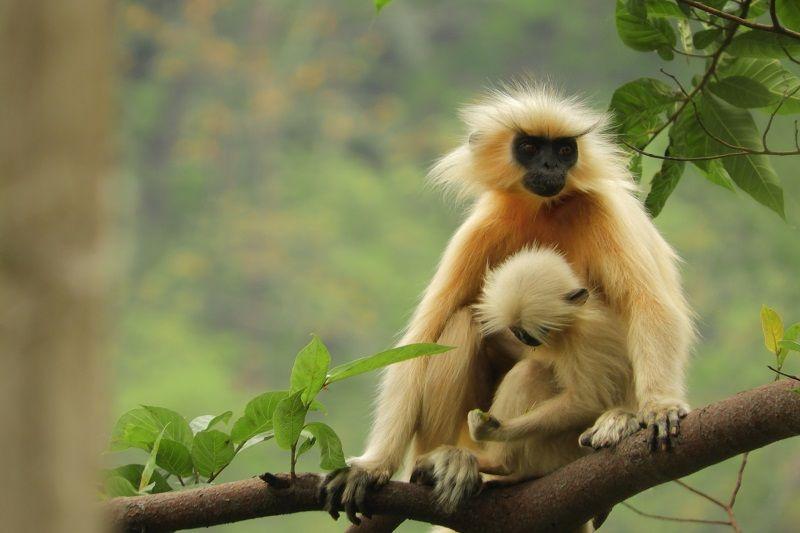
The Golden Langur is a very special kind of monkey. They have super beautiful, shiny golden fur, like the color of honey! Their faces are black, which makes their golden fur stand out even more. The one I saw was an adult, probably a mama, holding her tiny, white baby close. Isn’t that sweet? These monkeys love living high up in the trees, almost never touching the ground. It’s like their own big treehouse!
Why Are Golden Langurs So Cool?
These amazing creatures are quite rare, and you can only find them in a few special places, like Assam. They are called ‘arboreal’, which means they spend nearly their whole lives climbing and swinging in trees. They eat leaves, yummy fruits, and colorful flowers they find in the forest. Staying in the trees keeps them safe from other animals on the ground.
My Top Tips for Spotting a Golden Langur!
- Be Quiet: Animals get scared easily, so whisper and move slowly.
- Look Up: Remember, Golden Langurs live in the trees! Scan the branches carefully.
- Be Patient: Sometimes you have to wait a long time. But the wait is always worth it!
Seeing the mama and her baby was such a heartwarming moment. It reminded me how important it is to protect these special animals and their homes. Every time we visit places like Assam, we learn more about our incredible planet.
Ready for Your Own Golden Langur Quest?
I hope my story makes you want to explore nature and look for hidden treasures, just like finding a Golden Langur. What amazing animals do you hope to see one day? Let me know in the comments!
Read more about amazing wildlife in Assam in my other posts!
[/easy_reading][normal_reading]
Chasing Gold: My Unforgettable Encounter with the Golden Langur in Assam
The humid air of Assam hung heavy on December 15, 2024, as I ventured deep into its emerald heart. For a seasoned bird blogger like myself, stepping outside my usual feathered pursuits to seek out primates was a thrilling change of pace. My mission: to witness the elusive and magnificent Golden Langur. This post isn’t just about a sighting; it’s a journey through patience, anticipation, and the profound beauty of one of India’s most iconic and vulnerable primates. Join me as I recount the magic of meeting this golden jewel of the canopy.
Understanding the Golden Langur: A Glimpse into the Primates of Assam
The Golden Langur (Trachypithecus geei) is not just another monkey; it’s a primate species steeped in both beauty and biological intrigue. Part of the broader langur family, these animals are instantly recognizable by their striking golden-blonde fur, contrasting sharply with their jet-black faces. Found predominantly in a small region of western Assam and neighboring Bhutan, their limited distribution makes every sighting a privilege and underscores their conservation importance.
My encounter featured an adult, unmistakably a female, tenderly cradling her infant. The baby’s fur was a lighter, almost creamy white – a characteristic trait that gradually darkens as they mature. This scene, nestled amongst dense green foliage, perfectly illustrated their arboreal lifestyle. Golden Langurs spend nearly their entire lives high above the forest floor, a strategic adaptation that provides both safety from ground predators and direct access to their preferred diet of leaves, fruits, and flowers. It was a humbling reminder of nature’s intricate balance.
The Thrill of the Chase: My Personal Journey to Find the Golden Langur
Let me tell you, finding a Golden Langur isn’t like spotting a common pigeon. It requires immense patience, sharp eyes, and often, a bit of luck. There were moments of doubt, hours spent craning my neck upwards, wondering if today would be the day. I’ve had my share of “failures” in the field, days where the target species remained frustratingly hidden. But those moments teach you resilience. They teach you to appreciate the silence, the subtle rustle of leaves, and the intricate calls of the forest.
When I finally spotted that flash of gold high above, cradling her infant, it was an emotional payoff that transcended any previous frustration. It was a silent “f*** yeah” moment, a pure, unadulterated thrill. This wasn’t just another checklist item; it was a profound connection to a truly wild and rare creature, a testament to the beauty that still thrives when given a chance.
Your Golden Langur Quest: Tips for Visiting & Photography in Assam
Thinking of embarking on your own quest to see the Golden Langur? Here are a few pointers:
- When to Visit: The drier, cooler months (October to March) are generally best for wildlife spotting in Assam, offering clearer skies and more comfortable trekking.
- Where to Go: Manas National Park or Chakrashila Wildlife Sanctuary are prime locations known for Golden Langur populations.
- Ethical Viewing: Always maintain a respectful distance. Avoid sudden movements or loud noises. Never try to feed wild animals.
- Photography Gear: A telephoto lens (300mm or more) is essential for capturing good shots from a distance. A sturdy monopod or tripod can help with stability in low light.
- Patience is Key: These animals are masters of camouflage. Take your time, scan the canopy thoroughly, and let your eyes adjust.
Q&A: Diving Deeper into Golden Langur Facts
Q: Why is their fur so distinctly golden?
A: The vibrant golden-blonde fur is a unique genetic trait, believed to help them blend into the sun-dappled canopy, particularly amidst the dry leaves during certain seasons.
Q: Are Golden Langurs endangered?
A: Yes, they are classified as Endangered by the IUCN. Habitat loss due to deforestation and human encroachment is their primary threat, making conservation efforts critically important.
Conclusion: Protecting the Golden Jewels of Assam
My encounter with the Golden Langur in Assam was a powerful reminder of the incredible biodiversity our planet holds and the urgent need to protect it. Seeing the mother and infant thrive in their natural habitat instilled a renewed sense of purpose. Let’s champion the cause of these magnificent primates and their forest homes.
Have you had an unforgettable wildlife encounter? Share your stories in the comments below! And don’t forget to check out my other posts on the incredible wildlife of Assam, including fascinating birds of the region.
[/normal_reading]
No responses yet